Capacity utilization measures actual production relative to full capacity production.
Before choosing a second shift or another machine, examine the production schedule and the losses at the manufacturing constraint. Use this guide alongside our factory automation planning resources to prepare the decision.
Schedule loss is typically addressed with overtime or additional staff to defer capital expenditures.
For the machine proposal, ask what demand remains after reviewing staffing, changeovers and maintenance. Put that answer beside the proposed equipment scope before requesting capital approval.
Manufacturing capacity utilization formula: define the denominator
The industry capacity utilization rate equals a seasonally adjusted output index divided by a capacity index.
The capacity baseline incorporates a realistic work schedule, normal downtime and sufficient inputs for the capital in place.
For the Census industry estimator, use the following definition:
Full production capacity utilization rate = [(HT estimate of actual value of production) / (HT estimate of estimated value of full production)] * 100.
Keep that industry calculation labelled separately from the plant worksheet. For your own review, identify the production boundary, reporting period, output measure and capacity basis before entering a utilization figure.
Full capacity production incorporates normal downtime, fully available inputs and currently available machinery and equipment.
Ask: what work schedule, downtime allowance and input availability underpin the capacity estimate? Use the same written basis when reviewing the shift proposal and the equipment proposal.
Separate schedule utilization from OEE
OEE measures the percentage of planned production time that is truly productive.
TEEP measures the percentage of all time that is truly productive.
Within the TEEP framework:
Utilization = Planned Production Time / All Time
TEEP = OEE × Utilization
For the OEE calculation:
OEE = (Good Count × Ideal Cycle Time) / Planned Production Time
OEE = Availability × Performance × Quality
Bring the underlying counts and time records to the review. Continue with the OEE records guide when preparing the production baseline.
Second shift vs. new machine capex: questions for the decision
Schedule loss is time when production could run but is not scheduled.
Measure losses that affect the manufacturing constraint.
Use the following comparison as a review worksheet. Answer each question with your plant records and the proposed operating plan.
| Decision question | Additional shift proposal | Additional machine proposal |
|---|---|---|
| Production scope | Which orders and products would run in the added schedule? | Which orders and products would move to the proposed equipment? |
| Constraint | What losses remain at the constraint during scheduled production? | Which constraint would the equipment proposal address? |
| Staffing | Who would operate, supervise and support the added shift? | Who would operate and support the added equipment? |
| Maintenance | Where would planned maintenance fit in the revised schedule? | What maintenance work and support would the proposal require? |
| Commercial decision | What staffing and operating budget would you approve? | What equipment scope and capital budget would you approve? |
| Acceptance | What output and quality records would you review? | What output and quality records would you require at acceptance? |

Review the staffing plan alongside the proposed production schedule.
Check overtime and shift pay separately
Extra pay for weekend or night work is a matter of agreement between employer and employee or representative.
Under the federal FLSA:
Covered nonexempt employees must receive overtime pay for hours worked over 40 per workweek.
Overtime must be paid at a rate not less than one and one-half times the regular rate of pay.
List the applicable pay agreements and overtime assumptions in the staffing proposal. Reconcile them with the proposed workweek before comparing the operating budget with the equipment budget.
Examine changeover losses before specifying equipment
Breakdowns and changeovers are included as unplanned and planned stops respectively.
Availability = Run Time / Planned Production Time
Run Time = Planned Production Time − Stop Time
Changeover time runs from the last piece of the previous run to the first good piece after the changeover.
Internal setup operations can be performed only while the machine is stopped.
External setup operations can be performed while the machine is running.
Review the setup sequence at the constraint. Mark the activities that require a stopped machine and the preparation activities performed outside that stopped interval. Attach the observed sequence to the capital discussion.
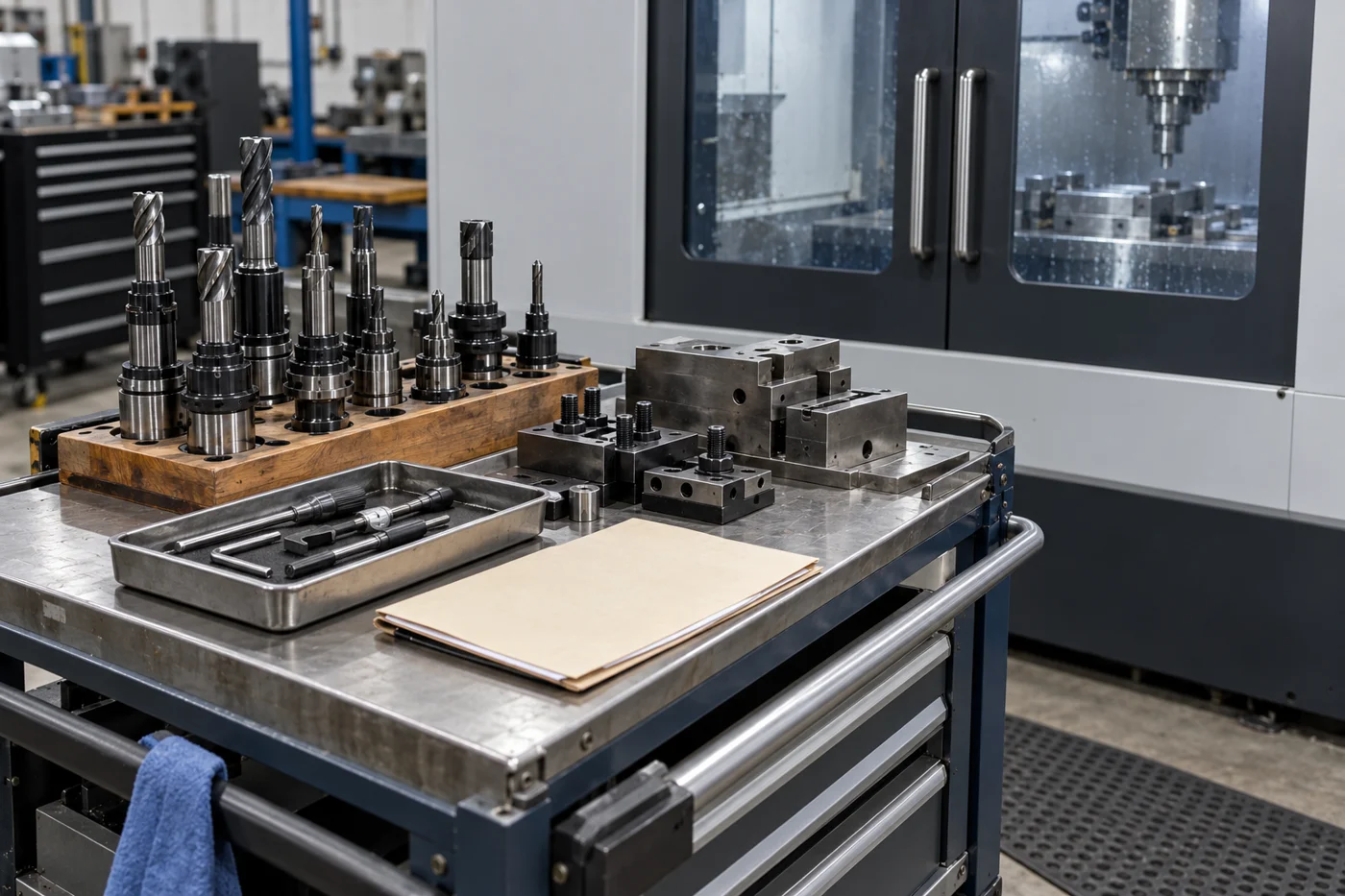
Review tooling preparation alongside the changeover record.
Put maintenance into the capacity schedule
Scheduling incorporates predicted future unavailability from planned maintenance and estimated unplanned maintenance.
Ask whether any calendar-based or cycle-based preventive maintenance actions are upcoming when deciding required component maintenance actions.
TPM involves operators in routine maintenance, improvement projects and simple repairs.
Review upcoming maintenance alongside the proposed shift calendar. Ask the maintenance team to identify the planned work, timing and support needed for each option.

Bring the maintenance plan into the capacity review.
Maintenance vs. growth capex: document the project scope
Describe the proposed repair, replacement or capacity addition before assigning the budget category. For tax treatment, use the IRS repair and improvement framework:
Distinguishing a repair from an improvement requires reviewing facts and circumstances.
A material increase in capacity is included in the IRS discussion of betterments.
Replacement of a major component or substantial structural part is included among restorations.
In the project request, state what work is proposed, what property it concerns and what operating outcome you intend to evaluate. Keep the operating objective and the tax classification explicit in the approval record.
Prepare the approval packet
Bring the completed comparison to the capital review with:
- The capacity definition and production reporting period.
- The current schedule and proposed shift calendar.
- The constraint loss record and changeover sequence.
- The staffing proposal, pay agreements and overtime assumptions.
- The planned maintenance work and timing.
- The proposed machine scope and acceptance questions.
Use the manufacturing equipment capital budget template to organize the request. For the equipment option, continue with the procurement checklist.
Questions to settle before approval
What does the capacity utilization figure measure?
Capacity utilization measures actual production relative to full capacity production.
What is schedule loss?
Schedule loss is time when production could run but is not scheduled.
What should the changeover record measure?
Changeover time runs from the last piece of the previous run to the first good piece after the changeover.
Sources
-
Federal Reserve Bank of Cleveland — Semiconductor Shortages and Vehicle Production and Prices
-
Vorne / OEE.com — Hidden Factory
-
Federal Reserve — Capacity Utilization Explanatory Notes
-
Census Bureau — QPC Methodology
-
Vorne / OEE.com — TEEP
-
Vorne / OEE.com — Calculating OEE
-
US DOL — Weekend or Night Work
-
US DOL — Wages and FLSA
-
Lean Enterprise Institute — Changeover
-
Lean Enterprise Institute — SMED
-
NIST — Selecting Optimal Data for Creating Informed Maintenance Decisions in a Manufacturing Environment
-
Lean Enterprise Institute — TPM
-
IRS — Tangible Property Final Regulations